-
Magnum Physiotherapy | Contact No : +91 9998238617
Magnum Physiotherapy | Contact No : +91 9998238617
When a muscle hurts, is tight, or feels constantly knotted, traditional therapy steps in to rub it, stretch it, or apply heat to it. However, modern neuroscience reveals a striking truth: muscles do not act on their own volition; they are completely governed by the brain’s motor control center.
Your brain possesses intricate internal movement blueprints. When you suffer an injury, maintain poor posture at a desk, or push through repetitive athletic strains, your brain modifies these blueprints to keep you moving. To protect an injured area, it commands certain muscles to "turn off" or become weak. To make up for this weakness, it forces adjacent muscles to "turn on" and work twice as hard.
This creates a Neuromuscular Compensation Pattern.
The muscle that constantly hurts is almost always the overworked "victim." Massaging it might make it feel better temporarily, but until you wake up the lazy muscle that caused the imbalance in the first place, the victim will keep screaming.
At Magnum Physio, our Myokinetic Therapy protocol directly addresses the brain's software. Through specialized, interactive testing, we identify these hidden structural pairings, clear out the faulty compensation, and reprogram your kinetic chain for long-term health.
Our Myokinetic framework utilizes an interactive, puzzle-solving clinical protocol to restore harmony to your body:
We don't just test individual muscle strength while you lie flat on a table. We test muscles in functional, interconnected kinetic pairs. By applying precise manual resistance, we look at the immediate communication loop between your nervous system and your musculoskeletal frame. This allows us to map exactly which muscles are hyperactive (overworking) and which are hypoactive (underworking).
Once we pinpoint the overworking, hyperactive muscle, we utilize specialized, short-duration manual compression or deep-tissue myofascial release. This sudden sensory input dampens the overactive neural signaling, effectively forcing the muscle to relax and step down from its defensive guarding state.
Immediately after quietening the overworking muscle, we guide you through specific, isolated contractions to jump-start the dormant, underworking muscle. This precise timing leverages a window of neurological neuroplasticity, forcing your brain's motor control center to rebuild its connection to the neglected tissue.
A muscle is only useful if it knows how to work with its neighbors. The final step of our Myokinetic session integrates the newly awakened muscle into full-body functional movements—like a squat, a stride, or an overhead reach. This locks the new, corrected blueprint into your brain's long-term movement memory.
Our advanced movement application relies on solid, research-backed neuro-mechanical mechanisms to transform your biomechanics:
Exploiting Sherrington’s Law of Reciprocal Inhibition: This fundamental physiological law states that when the brain sends an intense signal to contract a muscle, it automatically sends an inhibitory signal to relax its opposing partner. Myokinetic Therapy uses this exact neurological reflex. By manually releasing a hyperactive muscle and immediately contracting its weak counterpart, we reset the baseline tension across the joint, restoring fluid balance.
Rewriting the Motor Control Hierarchy: Your brain prioritizes survival and energy efficiency over perfect alignment. If a core stabilizer is weak, your brain will gladly recruit a hip flexor or a lower back muscle to stabilize your spine. MKT systematically deconstructs this faulty hierarchy. We safely strip away the brain's clumsy backup plans and force the primary movers to take back their natural anatomical responsibilities.
Proprioceptive Neuromuscular Calibration: Muscles are packed with specialized stretch detectors called muscle spindles. When a compensation pattern is embedded, these sensors lie to your brain, making a twisted, dysfunctional posture feel "straight" and normal. Myokinetic adjustments recalibrate these internal sensors, giving your brain crystal-clear, accurate feedback so it can manage your movements effortlessly.
Because it targets global movement coordination rather than isolated tissue damage, MKT is highly successful for:
Chronic, unresolving lower back pain and sacroiliac (SI) joint instability
Recurrent shoulder impingements, rotator cuff weaknesses, and neck tightness
Hip tracking issues, deep gluteal pain, and unresolving IT band syndromes
Patellofemoral knee pain and persistent tracking errors during running or lifting
Chronic ankle instability and recurring calf or hamstring strains
At Magnum Physio, we have synthesized the principles of Myokinetic Activation directly into our specialized MAGNUM FM- NETWORK PROTOCOL [cite:]. We recognize that bones, fascia, and muscles form a singular, continuous web.
We don't treat your body in fragments. We cross-reference Myokinetic Therapy with structural osteopathy [cite:], Stecco Fascial Manipulation© [cite:], and chiropractic adjustments [cite:]. By ensuring that your joints are aligned [cite:], your deep fascia is fluid [cite:], and your brain's movement software is perfectly programmed, we offer the ultimate comprehensive recovery. Stop chasing the pain—come to Magnum Physio and fix the pattern once and for all [cite:].
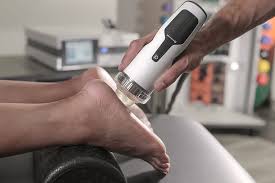
Focused Shockwave Therapy (Short Article)Focused Shockwave Therapy ek advanced non-surgical treatmen...
Read More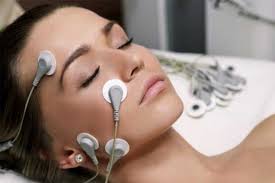
Cord Microcurrent Laser Therapy (Short Article)Cord Microcurrent Laser Therapy ek modern treatment t...
Read More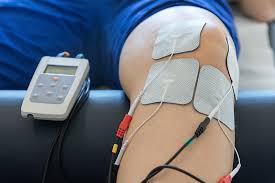
Electrotherapy kya hoti hai? (Short Article)Electrotherapy ek physiotherapy treatment hai jisme halk...
Read More
Class 4 Laser Needle Therapy (Short Article)Class 4 Laser Needle Therapy ek advanced treatment techn...
Read More
Common Neurological DisordersNeurodegenerative Diseases: Alzheimer’s disease, Parkinson's disea...
Read More