-
Magnum Physiotherapy | Contact No : +91 9998238617

Magnum Physiotherapy | Contact No : +91 9998238617
Boutonnière Deformity occurs when the central slip of the extensor tendon—the tendon responsible for straightening the middle joint of the finger—is injured or weakened. As a result, the middle joint bends toward the palm while the fingertip joint bends backward into hyperextension.
The term "Boutonnière" is French for "buttonhole," describing the appearance of the tendon slipping through surrounding structures after injury.
This condition most commonly affects:
Boutonnière Deformity can develop suddenly following trauma or gradually due to inflammatory conditions such as rheumatoid arthritis.
Early diagnosis and treatment are important to prevent permanent joint stiffness and deformity.
At Magnum Physiotherapy, our rehabilitation programs focus on restoring tendon function, improving finger mobility, strengthening hand muscles, and maximizing overall hand performance.
The extensor tendon runs along the back of the finger and allows finger straightening.
The central slip attaches to the middle phalanx and straightens the proximal interphalangeal (PIP) joint.
When damaged, normal finger extension becomes compromised.
The middle joint of the finger.
In Boutonnière Deformity, this joint becomes flexed (bent).
The joint closest to the fingertip.
In Boutonnière Deformity, this joint becomes hyperextended.
A common cause of chronic Boutonnière Deformity due to tendon weakening.
Symptoms may develop immediately after injury or gradually over time.
Early diagnosis improves treatment outcomes.
A healthcare provider may assess:
A commonly used clinical test to evaluate central slip injuries.
Used to identify:
May be used when tendon injuries require further evaluation.
At Magnum Physiotherapy, we assess:
Treatment depends on the severity and duration of the condition.
Many cases respond well to non-surgical treatment when addressed early.
The PIP joint is maintained in extension to allow tendon healing.
Splinting may be required for:
Following the immobilization phase, rehabilitation focuses on restoring motion and function.
Designed to:
Help maintain tendon mobility and function.
Focus on:
Includes:
Depending on patient needs:
Surgery may be recommended when:
Post-surgical physiotherapy is essential for restoring function and preventing stiffness.
Recovery depends on:
Acute Cases
Chronic Cases
Early treatment generally produces the best outcomes.
Without proper treatment, complications may include:
Prompt treatment significantly reduces these risks.
Consult a healthcare professional if you experience:
Early diagnosis and treatment can help prevent long-term complications.
At Magnum Physiotherapy, we specialize in hand rehabilitation and orthopedic physiotherapy. Our personalized Boutonnière Deformity treatment programs combine evidence-based rehabilitation, splinting guidance, mobility restoration, strengthening exercises, and functional retraining to help patients regain optimal hand function and return to daily activities with confidence
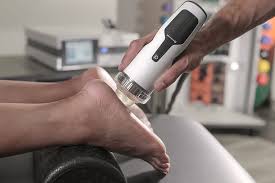
Focused Shockwave Therapy (Short Article)Focused Shockwave Therapy ek advanced non-surgical treatmen...
Read More
Cord Microcurrent Laser Therapy (Short Article)Cord Microcurrent Laser Therapy ek modern treatment t...
Read More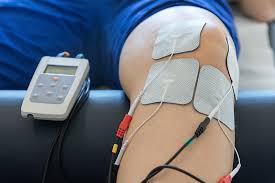
Electrotherapy kya hoti hai? (Short Article)Electrotherapy ek physiotherapy treatment hai jisme halk...
Read More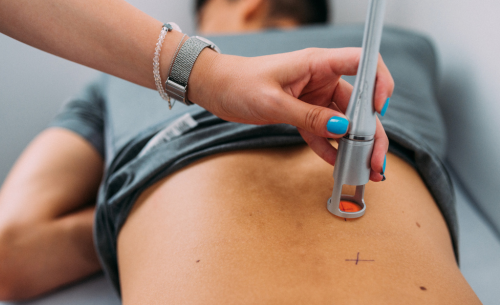
Class 4 Laser Needle Therapy (Short Article)Class 4 Laser Needle Therapy ek advanced treatment techn...
Read More
Common Neurological DisordersNeurodegenerative Diseases: Alzheimer’s disease, Parkinson's disea...
Read More