-
Magnum Physiotherapy | Contact No : +91 9998238617
Magnum Physiotherapy | Contact No : +91 9998238617
Spondylolisthesis occurs when a vertebra moves forward relative to the vertebra beneath it, causing changes in spinal alignment and stability. The condition most commonly affects the lumbar spine, particularly at the L4-L5 and L5-S1 levels.
The severity of symptoms varies widely. Some individuals experience no symptoms, while others develop significant lower back pain, leg pain, numbness, weakness, or difficulty with daily activities.
Spondylolisthesis may result from congenital abnormalities, stress fractures, age-related degeneration, trauma, or previous spinal surgery. In some cases, the slipped vertebra can place pressure on nearby nerves, causing symptoms similar to sciatica.
At Magnum Physiotherapy, our evidence-based treatment programs focus on reducing pain, improving spinal stability, restoring mobility, and helping patients return safely to work, sports, and everyday activities.
The spine is made up of individual bones called vertebrae.
In spondylolisthesis, one vertebra shifts forward relative to the vertebra below it.
Discs act as cushions between the vertebrae.
Changes in spinal alignment may increase stress on these structures.
These joints guide spinal movement and help maintain stability.
Degeneration or abnormal loading may contribute to vertebral slippage.
Forward displacement of a vertebra may narrow spaces around the nerves, causing:
Muscles supporting the spine play an important role in maintaining stability and reducing symptoms.
Occurs due to a stress fracture or defect in a portion of the vertebra called the pars interarticularis.
Common in:
Caused by age-related changes in:
Most common in adults over age 50.
Present at birth due to abnormal spinal development.
Results from acute spinal injury or fracture.
Occurs due to diseases affecting bone integrity, such as tumors or infections.
Symptoms often worsen with prolonged standing and spinal extension activities.
Common in sports such as:
Natural wear and tear can contribute to spinal instability.
Abnormal spinal anatomy may predispose individuals to vertebral slippage.
Acute injuries may damage spinal structures and cause instability.
A thorough assessment helps determine the severity of the condition and guide treatment.
At Magnum Physiotherapy, assessment includes:
The primary imaging method used to:
May be used to assess:
Provides detailed assessment of bony anatomy when needed.
Most cases can be managed successfully with conservative treatment.
Focuses on:
Exercises are progressed carefully to avoid excessive spinal stress.
A cornerstone of rehabilitation.
Targets:
These muscles help support spinal stability.
Improves pelvic control and reduces spinal loading.
Enhances movement efficiency and daily function.
Addresses:
Focuses on:
Depending on individual needs:
A physician may recommend:
May be considered in selected cases, particularly for adolescents with symptomatic isthmic spondylolisthesis.
May include:
For symptom management when nerve irritation is present.
May be recommended when:
Common procedures include:
Post-operative physiotherapy is essential for recovery.
Recovery depends on:
Mild Cases
Moderate Cases
Post-Surgical Recovery
Many individuals achieve excellent outcomes with appropriate physiotherapy and activity modification.
Early intervention can help reduce these risks.
Consult a healthcare professional if you experience:
Early diagnosis and treatment can improve outcomes and help prevent progression
At Magnum Physiotherapy, we specialize in spinal rehabilitation and chronic back pain management. Our personalized Spondylolisthesis treatment programs combine evidence-based physiotherapy, core stabilization training, manual therapy, movement retraining, posture correction, and functional rehabilitation to help patients reduce pain, improve stability, and return confidently to their daily activities.
Focused Shockwave Therapy (Short Article)Focused Shockwave Therapy ek advanced non-surgical treatmen...
Read More
Cord Microcurrent Laser Therapy (Short Article)Cord Microcurrent Laser Therapy ek modern treatment t...
Read More
Electrotherapy kya hoti hai? (Short Article)Electrotherapy ek physiotherapy treatment hai jisme halk...
Read More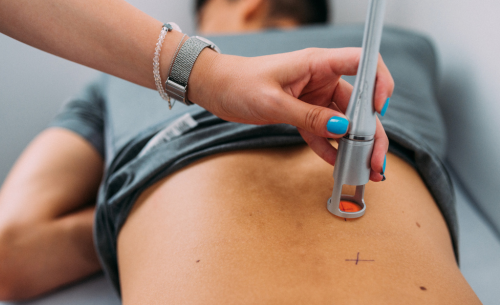
Class 4 Laser Needle Therapy (Short Article)Class 4 Laser Needle Therapy ek advanced treatment techn...
Read More
Common Neurological DisordersNeurodegenerative Diseases: Alzheimer’s disease, Parkinson's disea...
Read More