Logo

Meniscal Injury


The menisci are two C-shaped pieces of cartilage located between the femur (thigh bone) and tibia (shin bone) in each knee. They help distribute load across the knee joint, absorb shock, improve joint stability, and protect the articular cartilage.

A Meniscal Injury occurs when the meniscus becomes torn due to trauma or degenerative changes. Acute tears often occur during sports involving twisting, pivoting, or sudden changes in direction, while degenerative tears are more common in older adults due to age-related wear.

The severity and symptoms of a meniscal injury depend on:

  • The size of the tear
  • The location of the tear
  • Whether the knee is stable
  • Associated ligament or cartilage injuries

Many meniscal injuries can be successfully managed with physiotherapy, while some complex tears may require surgical intervention.

At Magnum Physiotherapy, our evidence-based treatment programs focus on reducing pain, restoring mobility, strengthening the knee, and preventing future injury.

Anatomy Involved

Knee Menisci

Each knee contains:

Medial Meniscus

  • Located on the inner side of the knee
  • More commonly injured
  • Less mobile than the lateral meniscus

Lateral Meniscus

  • Located on the outer side of the knee
  • More mobile
  • Less frequently injured

Functions of the Menisci

  • Shock absorption
  • Load distribution
  • Joint stability
  • Lubrication of the knee joint
  • Protection of cartilage surfaces

Types of Meniscal Tears

Traumatic Meniscal Tears

Common in athletes and active individuals.

Often occur during:

  • Twisting movements
  • Pivoting sports
  • Sudden directional changes

Degenerative Meniscal Tears

Develop gradually due to:

  • Aging
  • Osteoarthritis
  • Repetitive stress

Tear Patterns

Longitudinal Tear

Runs along the length of the meniscus.

Bucket Handle Tear

A displaced longitudinal tear that may cause knee locking.

Radial Tear

Extends from the inner edge outward.

Horizontal Tear

Occurs parallel to the tibial surface.

Complex Tear

Combination of multiple tear patterns.

Common Symptoms

  • Knee pain
  • Swelling
  • Joint line tenderness
  • Clicking or popping sensations
  • Knee stiffness
  • Limited range of motion
  • Locking of the knee
  • Catching sensation during movement
  • Difficulty squatting
  • Difficulty climbing stairs
  • Instability or giving way

Symptoms may appear immediately after injury or develop gradually.

Causes & Risk Factors

Sports-Related Causes

  • Soccer
  • Basketball
  • Football
  • Tennis
  • Skiing

Degenerative Causes

  • Aging
  • Osteoarthritis
  • Repetitive knee loading

Risk Factors

  • Previous knee injury
  • Ligament injuries (especially ACL tears)
  • Poor lower limb mechanics
  • High-impact sports
  • Occupational kneeling or squatting

Conditions Associated with Meniscal Injury

  • Anterior Cruciate Ligament (ACL) Injury
  • Osteoarthritis
  • Knee Instability
  • Cartilage Damage
  • Patellofemoral Pain Syndrome
  • Ligament Sprains

Diagnosis

At Magnum Physiotherapy, we perform a comprehensive assessment to identify the extent of injury and functional limitations.

Evaluation may include:

  • Detailed injury history
  • Pain assessment
  • Range of motion testing
  • Strength evaluation
  • Functional movement assessment
  • Gait analysis

Special Orthopedic Tests

  • McMurray Test
  • Thessaly Test
  • Joint line tenderness assessment

Imaging Studies

  • MRI (gold standard)
  • X-rays (to assess associated arthritis or bone injury)

MRI helps determine tear location, size, and severity.

Differential Diagnosis

Conditions that may mimic a meniscal injury include:

  • ACL Tear
  • MCL Sprain
  • Osteoarthritis
  • Patellofemoral Pain Syndrome
  • Loose Body in the Knee
  • Articular Cartilage Injury

Accurate diagnosis is essential for proper treatment planning.

Treatment at Magnum Physiotherapy

Many meniscal injuries can be managed conservatively without surgery.

Conservative Management

Acute Phase Care

  • Activity modification
  • Ice application
  • Compression
  • Elevation
  • Pain management

Advanced Physiotherapy Treatments

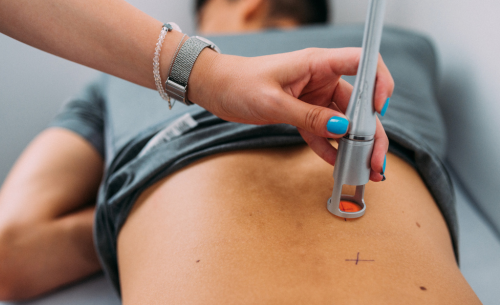
  • Class IV Laser Therapy
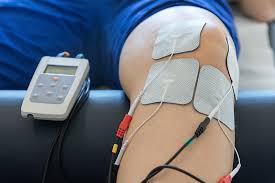
  • TENS Therapy
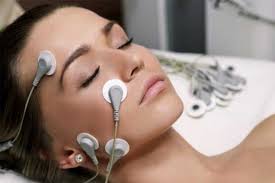
  • Interferential Therapy (IFT)
  • Therapeutic Ultrasound
  • Soft Tissue Mobilization
  • Kinesiology Taping

Rehabilitation Programs

Range of Motion Exercises

  • Knee mobility exercises
  • Flexibility training
  • Controlled movement restoration

Strengthening Exercises

Focus on:

  • Quadriceps strengthening
  • Hamstring strengthening
  • Gluteal strengthening
  • Hip stabilization exercises

Balance & Proprioception Training

  • Single-leg balance exercises
  • Neuromuscular training
  • Joint position awareness exercises

Functional Rehabilitation

  • Stair training
  • Squatting progression
  • Walking retraining
  • Sport-specific drills

Post-Surgical Rehabilitation

If surgery is required (such as meniscectomy or meniscus repair), physiotherapy is essential.

Goals Include

  • Pain and swelling control
  • Range of motion restoration
  • Strength recovery
  • Safe return to activity

Programs are customized based on the surgical procedure performed.

Benefits of Physiotherapy for Meniscal Injuries

  • Reduces pain and swelling
  • Improves knee mobility
  • Restores strength
  • Enhances stability
  • Improves balance
  • Promotes healing
  • Reduces reinjury risk
  • Supports return to sport
  • Restores functional independence
  • Improves quality of life

Recovery & Prognosis

Recovery depends on:

  • Tear type
  • Tear size
  • Age
  • Activity level
  • Treatment approach

General Recovery Guidelines

Conservative Treatment

  • Approximately 4–12 weeks

Meniscus Repair Surgery

  • Approximately 3–6 months

Partial Meniscectomy

  • Approximately 4–8 weeks

Early rehabilitation often leads to better outcomes.

Prevention Tips

  • Strengthen lower limb muscles
  • Improve flexibility
  • Warm up before activity
  • Use proper sports techniques
  • Maintain healthy body weight
  • Address knee pain early

When Should You Seek Medical Attention?

Consult a healthcare professional if you experience:

  • Persistent knee pain
  • Knee locking
  • Significant swelling
  • Instability or giving way
  • Difficulty walking
  • Reduced knee motion

Early diagnosis and treatment can help prevent long-term joint damage.

Why Choose Magnum Physiotherapy?

At Magnum Physiotherapy, we specialize in knee injury rehabilitation and orthopedic physiotherapy. Our personalized treatment programs combine advanced physiotherapy techniques, strength training, mobility restoration, and functional rehabilitation to help patients recover from meniscal injuries and return to an active lifestyle.
Our Blog

Chat with us Call us