Logo

Total Knee Replacement(tkr)


Total Knee Replacement (TKR) is one of the most successful orthopedic surgeries performed to treat severe knee joint degeneration when conservative treatments are no longer effective.

During the procedure, damaged cartilage and bone surfaces are removed and replaced with prosthetic components made of metal, plastic, or ceramic materials. These implants are designed to recreate the normal movement and function of the knee joint.

TKR is most commonly recommended for individuals experiencing:

  • Severe osteoarthritis
  • Rheumatoid arthritis
  • Post-traumatic arthritis
  • Significant joint deformity
  • Persistent pain limiting daily activities

The primary goals of surgery are to:

  • Reduce pain
  • Improve joint function
  • Increase mobility
  • Enhance quality of life

Physiotherapy plays a critical role before and after surgery to ensure the best possible outcome.

At Magnum Physiotherapy, our rehabilitation programs focus on restoring range of motion, rebuilding strength, improving balance, and facilitating a safe return to functional independence.

Anatomy Involved

Knee Joint

The knee consists of:

Bones

  • Femur (thigh bone)
  • Tibia (shin bone)
  • Patella (kneecap)

Cartilage

Smooth cartilage covers joint surfaces and allows friction-free movement.

Ligaments

  • Anterior Cruciate Ligament (ACL)
  • Posterior Cruciate Ligament (PCL)
  • Medial Collateral Ligament (MCL)
  • Lateral Collateral Ligament (LCL)

Muscles

  • Quadriceps
  • Hamstrings
  • Calf muscles
  • Hip stabilizers

During TKR, damaged joint surfaces are replaced with prosthetic components while surrounding soft tissues are preserved and rehabilitated.

Common Reasons for Total Knee Replacement

Osteoarthritis

The most common indication for surgery.

Symptoms may include:

  • Chronic knee pain
  • Joint stiffness
  • Swelling
  • Reduced mobility

Rheumatoid Arthritis

Inflammatory joint damage leading to pain and dysfunction.

Post-Traumatic Arthritis

Degeneration following previous knee injuries or fractures.

Severe Knee Deformities

Such as:

  • Bow-legged alignment (Varus)
  • Knock-knee alignment (Valgus)

Symptoms Leading to Surgery

  • Persistent knee pain
  • Difficulty walking
  • Stiffness
  • Reduced range of motion
  • Night pain
  • Difficulty climbing stairs
  • Functional limitations
  • Poor response to conservative treatment

Pre-Operative Physiotherapy ("Prehabilitation")

Preparing for surgery can improve recovery outcomes.

Goals Include

  • Improving strength
  • Enhancing flexibility
  • Optimizing walking ability
  • Educating patients about recovery expectations

Common Exercises

  • Quadriceps strengthening
  • Hamstring strengthening
  • Knee range of motion exercises
  • Balance training

Post-Operative Rehabilitation at Magnum Physiotherapy

Physiotherapy begins shortly after surgery and progresses through several stages.

Phase 1: Early Recovery (Days to Weeks)

Goals

  • Control pain and swelling
  • Restore knee motion
  • Improve mobility
  • Prevent complications

Treatments

  • Cryotherapy (Ice)
  • Gentle range of motion exercises
  • Walking training
  • Transfer training
  • Compression and swelling management

Phase 2: Strength & Mobility Restoration

Goals

  • Increase knee flexibility
  • Restore muscle strength
  • Improve gait

Exercises

  • Quadriceps strengthening
  • Straight leg raises
  • Hamstring exercises
  • Stationary cycling
  • Functional mobility training

Phase 3: Functional Rehabilitation

Goals

  • Improve endurance
  • Restore independence
  • Return to normal activities

Activities

  • Stair training
  • Balance exercises
  • Walking progression
  • Functional strengthening

Phase 4: Advanced Recovery

Goals

  • Maximize strength
  • Improve confidence
  • Return to recreational activities

Advanced Exercises

  • Dynamic balance training
  • Endurance conditioning
  • Activity-specific rehabilitation

Advanced Physiotherapy Treatments

Depending on individual needs:

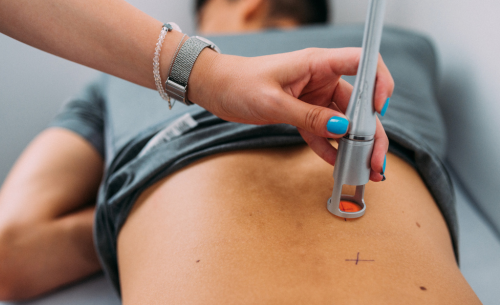
  • Class IV Laser Therapy
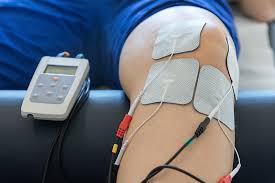
  • TENS Therapy
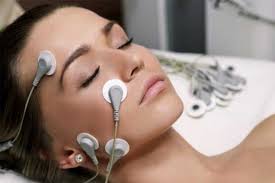
  • Interferential Therapy (IFT)
  • Neuromuscular Electrical Stimulation (NMES)
  • Manual Therapy
  • Soft Tissue Mobilization

Benefits of Physiotherapy After TKR

  • Reduces pain and swelling
  • Restores knee range of motion
  • Improves muscle strength
  • Enhances walking ability
  • Improves balance and stability
  • Prevents stiffness
  • Promotes faster recovery
  • Supports independence
  • Reduces fall risk
  • Improves quality of life

Potential Complications

Although uncommon, complications may include:

  • Infection
  • Blood clots
  • Joint stiffness
  • Persistent swelling
  • Implant loosening
  • Balance difficulties

Proper rehabilitation helps minimize these risks.

Recovery Timeline

Recovery varies among individuals.

Typical Milestones

0–6 Weeks

  • Walking with assistance
  • Improving range of motion
  • Early strengthening

6–12 Weeks

  • Increased independence
  • Improved strength and mobility

3–6 Months

  • Significant functional recovery

6–12 Months

  • Continued improvements in strength and function

Full recovery may take up to one year.

Long-Term Outcomes

Most patients experience:

  • Significant pain relief
  • Improved mobility
  • Better walking tolerance
  • Enhanced participation in daily activities
  • Improved overall quality of life

Modern knee replacements often last 15–20 years or longer.

When Should You Seek Medical Attention After Surgery?

Contact your healthcare provider immediately if you experience:

  • Increasing redness or swelling
  • Fever
  • Drainage from the incision
  • Severe calf pain
  • Sudden shortness of breath
  • Worsening knee pain

These symptoms may indicate complications requiring urgent evaluation.

Why Choose Magnum Physiotherapy?

At Magnum Physiotherapy, we specialize in orthopedic rehabilitation and post-surgical recovery. Our individualized Total Knee Replacement rehabilitation programs combine evidence-based physiotherapy, advanced pain management techniques, strength training, gait retraining, and functional rehabilitation to help patients achieve the best possible outcomes after surgery.
Our Blog

Chat with us Call us